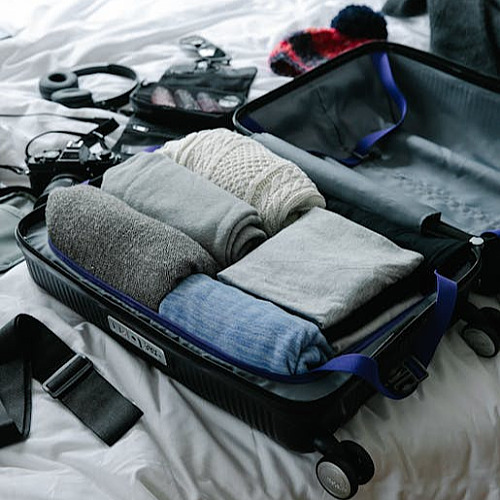
We’re at a weird stage in the evolution of travel where airlines can get away with charging a small fortune to check a bag. Depending on the flight, it actually may even be more expensive than your ticket! Checking a bag for a one-week trip can cost anywhere from $35 to $70 each way on major U.S. airlines. Besides the financial cost, this can also be seen as an opportunity cost. You could be doing a ton of other things when you land, but instead, you’re waiting at the baggage claim, hoping that your bag has made it to your destination.
While this may initially feel like just another hurdle you have to go through to travel, the good news is that seven days’ worth of clothing can easily fit inside a standard carry-on suitcase. In fact, I traveled around the world for years with just a carry on. The trick is that you have to approach the process with a clear strategy and be very intentional when you pack. With the right combination of wardrobe planning, folding techniques, and organizational tools, you can skip the checked bag counter entirely and walk straight to your gate.
Know Your Space Before You Start
Most major U.S. airlines cap carry-on dimensions at 22 x 14 x 9 inches, including handles and wheels. That gives you roughly 45 liters of packing space to work with. This may sound like a lot initially, but that space can be filled up pretty quickly if you aren’t careful. You may also find out last minute that your airline gives less space than you thought. This actually happened to me when I was at the boarding gate once, and I had to beg the gate agent to keep my backpack with me. Confirm your airline’s specific requirements well before you start tossing items into your bag so there are no surprises at the gate.
Build a Capsule Wardrobe Around Neutral Pieces
The biggest mistake travelers make when packing for a week is treating each day as a completely separate outfit. This isn’t a good idea for a few reasons. First, you really don’t need that many clothes. Second, every single thing you put in your bag will need to be carried from one place to another at some point during your trip. That may be you carrying it, your travel partner, or the poor baggage handler at the airport. Third, traveling with a lot of luggage can actually make you more vulnerable to crime or theft. A good rule of thumb is to take only what you need and leave the rest at home.
I know, I know. It’s hard to leave those red pants or that colorful skirt at home when you know they’ll look soooooo good in photos. However, a more effective approach is to build a capsule wardrobe around a cohesive color palette. Choose two or three neutral base colors for your bottoms and outerwear, and then mix in a few tops that coordinate with all of them. I tend to go for black because it’s the easiest to color-coordinate with, and it takes longer to get dirty.
For a seven-day trip, a practical capsule might include three bottoms (such as one pair of jeans, one pair of shorts or a skirt, and one pair of versatile pants), five tops, seven sets of undergarments, one light jacket or cardigan, and one pair of pajamas. I like to carry two pairs of black pajama pants that can also be worn during the day when I’m out exploring. Every top should work with every bottom, which gives you 15 possible outfit combinations from a relatively small number of items. I then like to spice up my outfits by wearing colorful scarves. Sometimes I buy these when I’m traveling and they become my favorite souvenirs! Wearing your bulkiest pieces on the plane, such as boots and a heavier jacket, frees up significant space inside the bag.
Roll Lightweight Items and Fold the Rest
The rolling versus folding debate has been going on for years among frequent travelers, and the answer is that both techniques have their place. Rolling works best for casual, lightweight items like t-shirts, tank tops, athletic wear, and knit fabrics. Tightly rolled garments compress into compact bundles that stack neatly and allow you to see everything at a glance without digging through layers.
Structured or heavier garments, such as button-down shirts, dress pants, and thick sweaters, are better off folded along their natural creases. Folding these items and placing them flat on top of your rolled clothing keeps them smoother and reduces wrinkling. The hybrid approach, rolling some items and folding others, gives you the space savings of rolling with the wrinkle prevention of folding.
Use Compression Packing Cubes to Maximize Every Inch
Packing cubes have become one of the most popular travel accessories for a reason. Compression packing cubes, which feature an additional zipper that squeezes out excess air, can reduce the volume of packed clothing by 30 to 60% depending on the fabric. That’s a significant amount of reclaimed space inside a carry-on.
A three-cube system works well for a week-long trip. Dedicate one cube to tops, one to bottoms, and a smaller one to undergarments and socks. Alternatively, you can dedicate each tube to particular types of clothes. For example, I’ll often put tank tops and shorts together while leaving long sleeved shirts and pants in another packing cube.
Think about when and where you’ll be wearing your clothes and organize them accordingly. This saves you from having to pull each packing cube out of your bag whenever you get dressed. This is particularly useful if you’re traveling in two distinct climates. After loading each cube, zip the compression panel to squeeze the contents down. This approach keeps your bag organized throughout the trip and makes it easy to pull out exactly what you need without unpacking everything.
Fill the Gaps With Small Items
Once your packing cubes are in place, there will be small pockets of unused space around the edges of your bag and inside your shoes. These gaps are the perfect home for socks, underwear, charging cables, or a rolled-up belt. Stuffing socks inside shoes serves double duty by filling dead space while also helping shoes hold their shape during transit. I love putting bars of soap in these spaces as they keep my belongings smelling nice and fresh. Your toiletry bag, provided it complies with the TSA liquids rule, can often slide into the front compartment of your carry-on or the space along one side.
Plan for Laundry on Longer Stays
If your trip leans toward the longer side of a week, a small packet of travel laundry detergent can extend your wardrobe significantly. Washing a few lightweight items in a hotel sink during your trip means you can rewear certain pieces without packing duplicates. If you don’t have laundry detergent, don’t worry. In a pinch, you can also use shower gel or a bar of soap.
Make sure to allow time for your clothing to dry as wet clothes can stink up your bag pretty quickly! I tend to wash lightweight clothes when I have two days in the same location or when there’s a heater in the room that will allow clothes to dry quickly. A thin, quick-dry travel towel can also speed up the drying process if you don’t have access to a clothesline or drying rack. This simple step allows you to pack fewer items overall while still staying fresh every day of your trip.
Pack With a Purpose
Fitting a full week into a carry-on is less about sacrificing what you want to bring and more about being intentional with how you bring it. Think about where, when, and how you’ll use everything in your bag. A coordinated wardrobe, smart folding techniques, and compression packing cubes can turn even a small suitcase into a surprisingly spacious travel companion.



Leave a Comment
Your email address will not be published. Required fields are marked *