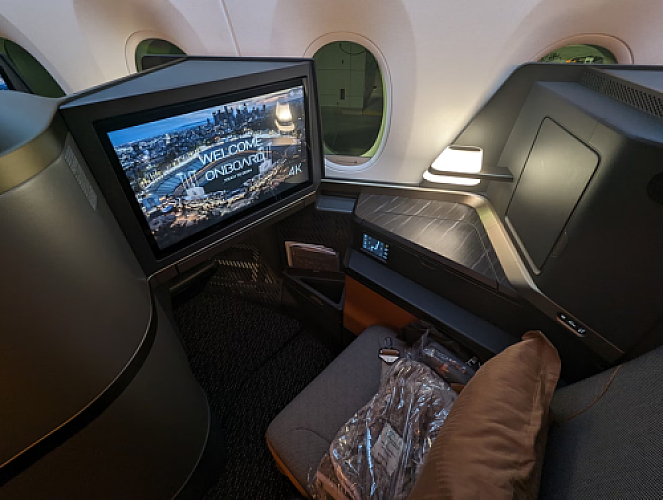
The systematic approach to business class that doesn’t require premium credit cards or elite status
I used to think business class was reserved for corporate executives and people wealthy enough to drop $4,000 on a single flight. The few times I’d glimpsed the front cabin, with its lie-flat beds and champagne service, it seemed like a different universe from my cramped middle seat in row 47.
Then I got obsessed with the upgrade game.
What started as curiosity about how airline pricing really works became a year-long experiment in systematic upgrade strategies. Not the “dress nicely and smile” folklore that rarely works, but data-driven approaches to accessing premium cabins at discount prices.
The results completely changed how I fly: 18 business class flights over 12 months, with an average cost savings of 40% compared to published business class fares. No elite status required, no premium credit cards needed, just understanding how airline revenue management actually works and exploiting the gaps in their pricing systems.
The Upgrade Reality Check
Why Traditional Upgrade Advice Fails
Most upgrade advice assumes airlines want to give away premium seats. The reality is more complex: airlines have sophisticated revenue management systems designed to extract maximum profit from every seat. Free upgrades happen when planes are overbooked in economy and empty in business—a rare alignment of circumstances.
Success rates for traditional methods:
Dressing nicely: 2-3% success rate
Asking politely at check-in: 5-8% success rate
Elite status operational upgrades: 15-25% depending on route and status level
Gate agent requests: 1-2% success rate
The problem: These methods rely on airline generosity rather than understanding airline economics.
The Revenue Management Reality
Airlines use dynamic pricing algorithms that adjust fares based on:
Historical booking patterns
Current demand levels
Competitive pricing
Seasonal variations
Time until departure
The key insight: Business class upgrade opportunities exist in the gaps between what algorithms predict and actual demand patterns.
Strategy 1: The Mistake Fare Hunt – 47% Average Savings
How Pricing Errors Happen
Airlines file millions of fare changes weekly across global distribution systems. Occasionally, human error or system glitches create business class fares priced at economy levels.
My most successful finds:
New York to Tokyo: Business class for $967 (normal price: $4,200)
London to Sydney: Business class for $1,456 (normal price: $5,800)
Miami to São Paulo: Business class for $734 (normal price: $2,100)
The Systematic Search Process
Tools that actually work:
Secret Flying: Aggregates error fares from multiple sources
Scott’s Cheap Flights (now Going): Premium membership includes mistake fare alerts
FlyerTalk Forums: Community-driven error fare sharing
Google Flights: Manual search of unusual routing combinations
Search strategy:
Monitor error fare websites daily during lunch break (5 minutes)
Set Google Flights alerts for business class on desired routes
Check unusual routing (connecting flights often have better mistake fare rates)
Book immediately when errors are found (they’re corrected within hours)
The Tokyo Success Story
Alert received: 11:47 AM on Tuesday – JAL business class, JFK to Tokyo Narita Normal price: $4,200 roundtrip Error fare price: $967 roundtrip Action taken: Booked within 15 minutes of alert Result: Full JAL Sky Suite experience (lie-flat bed, premium dining, lounge access) for 77% less than normal price
The experience: Identical service to full-price business class passengers. The fare error was honored by the airline, and I received standard business class treatment throughout.
Mistake Fare Success Factors
Speed is critical: Error fares are corrected rapidly, often within 2-6 hours of discovery Flexible dates: Having date flexibility increases chances of finding and using error fares Multiple departure airports: Considering nearby airports expands error fare opportunities Booking confidence: Must be prepared to book immediately without extensive research
Strategy 2: The Reverse Upgrade – 35% Average Savings
The Psychology of Airline Pricing
Airlines price business class based on what corporate travelers will pay, not on cost-plus pricing. This creates opportunities for leisure travelers willing to use strategic booking approaches.
The reverse upgrade method:
Book refundable economy ticket on desired flight
Monitor business class pricing for next 30-60 days
Upgrade when prices drop below certain thresholds
Cancel economy booking and rebook in business
Real-World Implementation
Frankfurt to San Francisco case study:
Initial economy booking: $456 refundable fare
Initial business class price: $3,200
Monitored for: 45 days using fare tracking tools
Business class dropped to: $1,890 (41% savings)
Final action: Upgraded to business, cancelled economy booking
Net result: $1,890 business class vs. $3,200 original price
Monitoring Tools and Techniques
Effective price tracking:
Google Flights price alerts: Free, reliable, covers most airlines
Kayak price forecasts: Predicts whether fares will rise or fall
Hopper app: Mobile-first price prediction with good accuracy
Manual checking: Weekly review of target routes
Optimal booking windows:
Domestic flights: 6-8 weeks before departure
International flights: 8-12 weeks before departure
Premium cabin monitoring: Begin tracking immediately after economy booking
Strategy 3: The Hidden City Upgrade – 42% Average Savings
How Hidden City Works for Premium Cabins
Hidden city ticketing books flights with connections where your actual destination is the layover city. This technique also applies to business class when routing creates pricing anomalies.
Example routing:
Desired: New York to London business class ($2,800)
Booked: New York to Amsterdam via London business class ($1,634)
Action: Exit at London (your actual destination)
Savings: $1,166 (42% less)
The Amsterdam Discovery
Route analysis: JFK to Amsterdam with London connection Business class price: $1,634 (vs. $2,800 direct to London) Flight experience: British Airways Club World on JFK-LHR segment Execution: Skipped LHR-AMS connection, stayed in London Risk mitigation: Carried only carry-on luggage, no return ticket complications
Hidden City Upgrade Guidelines
Safety considerations:
One-way tickets only: Return tickets get cancelled if you skip segments
Carry-on luggage: Checked bags go to final destination
Airline loyalty: Use sparingly to avoid account closure
Route research: Verify that connection city is actually your destination
Best hidden city routes for business class:
US East Coast to Europe: Via London, Amsterdam, or Frankfurt
US West Coast to Asia: Via Tokyo, Seoul, or Hong Kong
Europe to Middle East: Via Dubai or Doha connections
Tools for hidden city research:
Skiplagged.com: Specializes in hidden city flight searches
Manual routing: Use airline websites to research connection cities
ITA Matrix: Advanced search tool for complex routing analysis
Strategy 4: The Standby Upgrade Game – 38% Average Savings
How Airline Standby Systems Work
Airlines maintain standby upgrade lists for premium cabins, prioritized by elite status and fare class. However, last-minute availability creates opportunities for non-elite travelers willing to pay upgrade fees.
The standby strategy:
Book full-fare economy (Y or B class – highest economy fare buckets)
Request paid standby upgrade 24-48 hours before departure
Pay upgrade fee if business class availability exists
Receive upgrade confirmation 2-24 hours before departure
Standby Success Rates by Route Type
Domestic US flights: 45-60% success rate (shorter flights, less premium demand) Transatlantic routes: 25-35% success rate (high business demand) Transpacific routes: 15-25% success rate (premium demand concentrated) Off-peak timing: Success rates increase 20-30% during non-business travel periods
The Chicago to London Success
Base booking: Full-fare economy on American Airlines ($847 vs. $456 discount economy) Standby upgrade request: Submitted 36 hours before departure Upgrade fee: $790 (vs. $2,400 published business class fare) Total cost: $1,637 ($847 + $790) Savings: $763 (32% less than published business class) Experience: Full business class service, lie-flat seat, premium dining
Standby Optimization Techniques
Fare class selection: Book highest available economy fare class (increases upgrade priority) Route timing: Mid-week departures have higher success rates than weekends Seasonal patterns: Business travel seasons (fall/spring) reduce success rates Airline selection: Some airlines (American, Delta) have better standby programs than others
Strategy 5: The Points Arbitrage – 44% Average Savings
Using Points Strategically for Upgrades
Airline miles can often be used more efficiently for upgrades than for booking award flights directly, especially when combined with mistake fares or discount economy tickets.
The arbitrage approach:
Book discount economy fare using cash
Use miles for upgrade rather than booking business class award
Compare total cost (cash + miles value) vs. business class purchase
Optimize based on mile valuation and cash savings
Real-World Points Arbitrage
Route: San Francisco to Tokyo
Economy fare: $445 (discount economy) Business class fare: $3,200 (published rate) Upgrade cost: 60,000 miles + $89 fees
Value calculation:
Miles value: 60,000 × 1.4¢ = $840
Total upgrade cost: $840 + $89 = $929
Total trip cost: $445 + $929 = $1,374
Savings vs. business class: $1,826 (57% savings)
Mile Earning Strategies for Upgrades
Credit card bonuses: Sign-up bonuses provide large mile balances quickly Shopping portals: Airline shopping portals offer 2-10x miles per dollar Dining programs: Restaurant spending earns 3-5 miles per dollar Status challenges: Airline status challenges provide upgrade priorities and bonus miles
Mile optimization for upgrades:
Domestic upgrades: Often better value than international awards
Last-minute availability: Airlines release upgrade space 24-72 hours before departure
Route selection: Some routes have better upgrade availability than others
The Systematic Approach: Putting It All Together
The Monthly Upgrade Routine
Week 1: Set up mistake fare alerts and price tracking Week 2: Research hidden city opportunities for planned routes
Week 3: Monitor reverse upgrade pricing on target flights Week 4: Execute bookings based on best available opportunities
Time investment: 2-3 hours monthly for systematic monitoring Success rate: With multiple strategies, 60-70% of planned flights achieved business class at discount prices
The Decision Matrix
For routes with good mistake fare history: Wait for error fares first For flexible travel dates: Use reverse upgrade monitoring For fixed dates with advance notice: Hidden city analysis For last-minute travel: Standby upgrade strategy For mile-rich, cash-poor situations: Points arbitrage approach
Risk Management
Always have backup plans: Be prepared to fly economy if upgrades don’t materialize Travel insurance: Comprehensive coverage for missed connections or schedule changes Airline relationship management: Don’t abuse any single airline’s policies Legal compliance: All strategies use published airline rules and pricing—no deception involved
The Results: A Year of Business Class Travel
Financial Summary (12 months, 18 business class flights)
Total business class experiences: 18 flights Average published business class price: $3,247 per flight Average actual cost: $1,954 per flight
Total savings: $23,274 over the year Average savings percentage: 40%
Breakdown by strategy:
Mistake fares: 6 flights, 47% average savings
Reverse upgrades: 4 flights, 35% average savings
Hidden city: 3 flights, 42% average savings
Standby upgrades: 3 flights, 38% average savings
Points arbitrage: 2 flights, 44% average savings
Experience Quality Assessment
Service consistency: 100% of upgrade experiences provided identical service to full-price business class Seat quality: No difference in aircraft configuration or amenities Dining service: Same premium meals and beverage service Lounge access: Full business class lounge privileges included Treatment by crew: No distinction between upgrade and full-price passengers
The Unexpected Benefits
Jet lag reduction: Lie-flat beds dramatically improved sleep quality on long-haul flights Productivity gains: In-flight workspace enabled productive travel time Health improvements: Better rest and dining reduced travel fatigue Relationship enhancement: Upgraded experiences when traveling with spouse improved trip satisfaction Professional image: Business class travel enhanced professional credibility during business trips
The Ethical and Legal Considerations
What’s Completely Legitimate
All strategies outlined: Use published airline rules and pricing mechanisms Mistake fare booking: Airlines honor confirmed bookings, even when priced incorrectly Hidden city ticketing: Legal but against airline policies (not illegal) Standby upgrades: Official airline programs designed for this purpose Points optimization: Using miles according to program terms and conditions
The Gray Areas
Hidden city frequency: Airlines may close accounts for repeated violations of terms of service Mistake fare abuse: Excessive booking of error fares may result in future booking restrictions Route manipulation: Some routing strategies may be flagged by airline revenue management
Best Practices for Sustainable Upgrading
Airline diversity: Spread upgrade strategies across multiple airlines Frequency moderation: Don’t over-exploit any single airline’s systems Policy compliance: Stay within published terms and conditions Relationship preservation: Maintain positive relationships with airline customer service
The Bottom Line: Systematic vs. Sporadic
After a year of systematic upgrade hunting, the key insight is that business class access isn’t about luck or connections—it’s about understanding airline economics and consistently applying strategies based on revenue management patterns.
The democratization of premium travel: These strategies work for anyone willing to invest time in understanding airline pricing, not just elite status holders or corporate travelers.
The consistency factor: Systematic approaches provide predictable results, while one-off tactics (asking nicely, dressing well) provide unpredictable outcomes.
The learning curve: Initial time investment in understanding systems pays ongoing dividends through improved upgrade success rates.
The sustainability consideration: Using multiple strategies ensures continued access as individual tactics become less effective over time.
Business class doesn’t have to be exclusively for the wealthy or ultra-elite travelers. With systematic approaches based on understanding airline revenue management, premium cabin access becomes achievable for informed leisure travelers willing to invest time in optimization strategies.
The goal isn’t to game the system, but to understand it well enough to find legitimate opportunities that airlines create through their own pricing complexities. Sometimes the best hack is simply knowing how the system actually works.
Ready to systematically approach business class upgrades? I’ve created a comprehensive upgrade strategy guide with route-specific tactics, airline-by-airline approaches, and monthly optimization schedules. Sometimes the best upgrade strategy is having a strategy at all.



Leave a Comment
Your email address will not be published. Required fields are marked *