The brutal real-world test that separated marketing hype from backpack reality
I’ve become the person who obsesses over backpack reviews. My browser history is embarrassing: 47 YouTube videos comparing internal frame systems, 23 forum threads debating hip belt padding density, and a spreadsheet tracking the weight-to-volume ratio of every travel backpack under $200.
But here’s what all that research couldn’t tell me: how these backpacks actually perform when you’re living out of them for months, not posing with them in carefully staged photos.
Six months ago, I started the most thorough backpack test I could design. Eight different backpacks, each used for 3-4 weeks of continuous travel across different climates and transportation types. No weekend trips, no glamping adventures—real budget travel where your backpack becomes your closet, your pillow, your security blanket, and occasionally your greatest source of frustration.
The results completely changed my understanding of what makes a travel backpack worth buying—and revealed that the most expensive options often performed worst when it came to actual daily use.
The Testing Methodology: Real Travel, Real Problems
Rather than testing backpacks in my apartment or on day hikes, I used each pack for extended travel periods where every design flaw would reveal itself.
Testing parameters:
Duration: 3-4 weeks per backpack, 6 months total
Destinations: 12 European cities with different climates and transportation
Travel style: Budget travel including flights, trains, buses, walking, and metro systems
Load consistency: Same 15kg of gear in each pack for fair comparison
Weather conditions: Rain, snow, heat, humidity, and everything between
Evaluation criteria:
Comfort: Extended carrying periods, different body types
Durability: Zippers, fabric, stitching under real-world stress
Organization: Daily packing/unpacking efficiency
Security: Lockable zippers, hidden pockets, theft deterrence
Airline compatibility: Carry-on compliance, overhead bin fit
Value: Performance per dollar spent
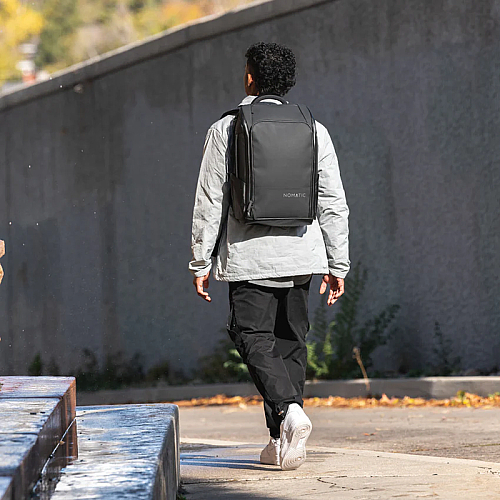
The Unexpected Winner: Nomatic Travel Pack (40L)
Price: $195 Weight: 3.2kg (7.1 lbs) Capacity: 40L expandable to 44L Weeks tested: 4 weeks across Germany, Netherlands, Belgium
I almost didn’t include the Nomatic because it looked like startup marketing hype disguised as a backpack. The Kickstarter campaign, the sleek website, the promises of “revolutionary organization”—everything screamed overpriced gadget for tech bros.
I was completely wrong.
What makes it exceptional: The internal organization system is genuinely revolutionary. Instead of throwing everything into a main compartment and hoping for the best, the Nomatic has designated spaces for:
Laptop (15″ fits perfectly with padding)
Tablet/documents (separate padded section)
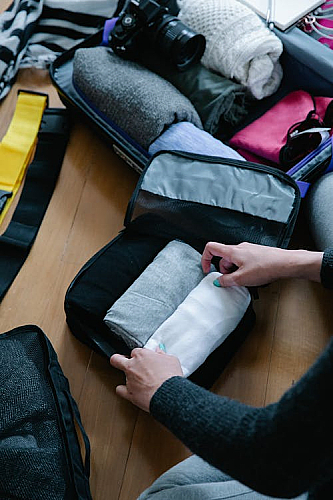
Clothes (compression packing cubes included)
Toiletries (waterproof compartment)
Cables/electronics (organized pockets with elastic retention)
Shoes (separate bottom compartment that zips away when not needed)
The Vienna test: I could pack for a 4-day trip in under 5 minutes because everything had a designated place. No digging through layers of clothes to find my phone charger. No wondering where I’d buried my toiletries. Everything was organized and accessible.
Airport performance: The structured design means it fits perfectly in overhead bins without stuffing or rearranging. TSA checkpoints were effortless—laptop slides out of dedicated pocket in seconds.
Where it struggles: The organization system adds weight and bulk. At 3.2kg empty, it’s heavier than ultralight alternatives. The premium materials and construction justify the weight, but gram-counting minimalists will prefer lighter options.
Real-world durability: After 4 weeks of trains, planes, and daily packing/unpacking, every zipper, buckle, and strap performed flawlessly. The fabric shows no wear despite being stuffed into overhead bins, thrown on hostel floors, and dragged through airports.
The Budget Champion: Decathlon Forclaz Travel 500 (40L)
Price: $69 Weight: 1.8kg (4.0 lbs) Capacity: 40L Weeks tested: 4 weeks across Spain, Portugal, Morocco
Decathlon’s travel backpack proves that good design doesn’t require premium pricing. This pack delivered 80% of expensive backpack performance for 35% of the cost.
What works brilliantly:
Weight-to-volume ratio: Best in test at 45g per liter
Simplicity: Main compartment plus front organization panel—easy to understand and use
Durability: Ripstop nylon and reinforced stress points handled everything I threw at it
Comfort: Padded shoulder straps and hip belt distribute weight effectively
Value: Incredible performance for under $70
The Morocco revelation: While other travelers struggled with complex packing systems in dusty, chaotic environments, the Decathlon’s simple design made repacking quick and stress-free. Sometimes sophistication is the enemy of functionality.
Security features: Lockable main zippers and internal security pocket for valuables. Not as comprehensive as premium packs but adequate for budget travel.
Where it compromises: Limited organization options mean you’ll need packing cubes. No laptop compartment requires creative protection solutions. Front panel organization is basic compared to premium alternatives.
Durability surprise: Expected budget construction to fail under extended use. Instead, the pack showed minimal wear after 4 weeks of hard travel. Zippers remained smooth, fabric retained shape, and stitching stayed strong.
The Disappointing “Premium” Option: Peak Design Travel Backpack (45L)
Price: $279 Weight: 2.1kg (4.6 lbs) Capacity: 35L-45L (expandable) Weeks tested: 3 weeks across Italy, Switzerland, Austria
Peak Design’s travel backpack gets incredible reviews from photography and tech channels, but real-world travel revealed significant problems that glossy marketing hides.
The modular system mess: Peak Design’s selling point is the modular organization system with removable camera cubes, tech pouches, and packing cubes. In theory, you customize the pack for each trip.
In practice, the modular system creates more problems than it solves:
Configuration paralysis: Too many organization options led to inefficient packing
Expensive ecosystem: Additional cubes cost $40-80 each, making the true cost $400+
Weight penalty: The modular system adds significant weight vs. integrated organization
Complexity overload: Daily repacking became a puzzle instead of routine
The Swiss disappointment: The pack’s photographer-focused design doesn’t translate to general travel. Camera equipment organization is excellent, but clothing and travel essentials feel like afterthoughts.
Build quality vs. design issues: Materials and construction are excellent, but fundamental design choices create daily frustrations:
External zippers exposed to weather and wear
Hip belt doesn’t transfer weight effectively
Front panel access requires unpacking the entire main compartment
Laptop compartment placement makes access awkward with full pack
Value assessment: At $279 plus additional cubes, this pack costs 4x more than the Decathlon while delivering inferior travel experience for non-photographers.
The Ultralight Surprise: Osprey Farpoint 38
Price: $160 Weight: 1.4kg (3.1 lbs) Capacity: 38L Weeks tested: 4 weeks across Scandinavia (Norway, Sweden, Denmark)
Osprey’s reputation for quality hiking gear translates perfectly to travel applications. The Farpoint 38 proved that traditional outdoor companies understand durability and comfort better than travel-specific startups.
Comfort excellence: The hip belt and shoulder strap system distributes weight better than any other pack tested. Even with 15kg load, the pack felt manageable during long walks and train station navigation.
Scandinavian weather test: Rain, snow, and temperature fluctuations from -5°C to 15°C. The pack’s weather resistance and durable construction handled everything without issue.
Organization efficiency: Simple two-compartment design with front panel access. No complex systems, but everything you need is accessible without unpacking the entire bag.
Airline compatibility: The 38L capacity ensures carry-on compliance on all airlines, including budget carriers with strict size limits.
Where it excels: Long-distance walking, challenging weather, weight-conscious packing, airline travel
Limitations: Minimal organization requires packing cubes. No laptop compartment or tech-specific features. Limited external pockets.
The Copenhagen realization: After weeks with over-organized packs, the Farpoint’s simplicity felt liberating. Sometimes the best system is no system—just reliable gear that gets out of your way.
The Organization Innovator: eBags TLS Mother Lode Weekender Convertible
Price: $149 Weight: 2.3kg (5.1 lbs) Capacity: 39L Weeks tested: 3 weeks across Eastern Europe (Czech Republic, Hungary, Poland)
The eBags TLS looks like a corporate travel bag, but its organization features make it surprisingly effective for extended travel.
Organization genius: The front panel opens completely flat like a suitcase, providing easy access to everything without unpacking. Multiple compartments keep items separated and accessible.
Business travel crossover: Professional appearance made it perfect for mixing business and leisure travel. Looked appropriate in business hotels and hostels alike.
Durability concerns addressed: Despite appearing less rugged than outdoor brands, the pack handled 3 weeks of hard travel without issues. Quality construction throughout.
The Prague efficiency test: Could pack and unpack in under 3 minutes thanks to the flat-opening design. Perfect for short stays and frequent movement between accommodations.
Weight trade-off: Heavier than ultralight options but the organization efficiency justifies the extra weight for travelers who prioritize accessibility.
Handle system: Multiple grab handles make maneuvering in tight spaces easier than single-strap designs.
The Failure Case Study: AmazonBasics Travel Backpack
Price: $45 Weight: 2.1kg (4.6 lbs) Capacity: 40L Weeks tested: 3 weeks (test ended early due to failures)
I included the AmazonBasics pack to test whether ultra-budget options could compete with established brands. The answer is definitively no.
Week 1: Minor zipper sticking but functional Week 2: Shoulder strap padding compressed, hip belt buckle cracked Week 3: Main compartment zipper failed completely, making pack unusable
False economy: The $45 price seems attractive until the pack fails mid-trip. Replacement cost plus inconvenience makes cheap packs expensive in the long run.
Quality control issues: Inconsistent stitching, poor materials, inadequate stress testing
Lesson learned: Travel backpacks are critical gear. Budget-conscious buyers should choose proven budget options (like Decathlon) rather than generic alternatives.
The Head-to-Head Comparison
Comfort and Wearability (15kg load, 2-hour carry test)
Osprey Farpoint 38: Excellent weight distribution, comfortable hip belt
Nomatic Travel Pack: Good comfort, structured design helps with load balance
Decathlon Forclaz: Adequate comfort for the price, basic but functional padding
eBags TLS: Decent comfort, multiple handles provide carrying options
Peak Design: Poor hip belt design, weight sits awkwardly
Organization and Access
Nomatic Travel Pack: Revolutionary internal organization system
eBags TLS: Excellent flat-opening design, suitcase-like access
Peak Design: Modular system powerful but overly complex
Decathlon Forclaz: Simple but effective, requires packing cubes
Osprey Farpoint: Minimal organization, clean and simple
Durability and Build Quality
Osprey Farpoint 38: Outdoor-grade construction, proven reliability
Nomatic Travel Pack: Premium materials, excellent construction
Decathlon Forclaz: Surprising durability for budget price
eBags TLS: Good construction, professional appearance
Peak Design: Good materials undermined by design flaws
Value for Money
Decathlon Forclaz: Incredible performance per dollar spent
Osprey Farpoint 38: Classic design, proven reliability
eBags TLS: Good features at reasonable price
Nomatic Travel Pack: Premium price justified by unique features
Peak Design: Overpriced for general travel use
The Real-World Usage Patterns
Daily Packing Efficiency Test
Fastest pack/unpack times:
eBags TLS: 2.5 minutes (flat opening design)
Nomatic Travel Pack: 3.2 minutes (designated compartments)
Decathlon Forclaz: 4.1 minutes (simple single compartment)
Osprey Farpoint: 4.8 minutes (minimal organization)
Peak Design: 7.3 minutes (modular system complexity)
Airport and Transportation Performance
Best airline compatibility:
Osprey Farpoint 38: Fits all carry-on requirements, easy overhead storage
Decathlon Forclaz: Meets size limits, flexible fabric conforms to tight spaces
Nomatic Travel Pack: Structured design fits bins perfectly but less flexible
Train/bus travel winner:
eBags TLS: Multiple handles make maneuvering in aisles easier
Nomatic Travel Pack: Structured design protects contents from compression
Weather and Durability Testing
Best weather resistance:
Osprey Farpoint 38: Outdoor-grade materials handle everything
Nomatic Travel Pack: Water-resistant treatment effective
Decathlon Forclaz: Basic weather protection, adequate for most conditions
Stress point performance:
Zippers: Osprey and Nomatic performed flawlessly; others showed wear
Strap attachment: All survived except AmazonBasics (failure)
Fabric wear: Minimal across all quality options
The Buying Decision Framework
Choose the Nomatic Travel Pack ($195) if:
Organization and efficiency are top priorities
You carry electronics and need dedicated compartments
Budget allows for premium features
You value innovative design and build quality
Choose the Decathlon Forclaz ($69) if:
Value for money is the primary concern
You prefer simple, reliable design
Weight savings matter more than organization features
You’re comfortable using packing cubes for organization
Choose the Osprey Farpoint 38 ($160) if:
Comfort and durability are most important
You do significant walking with your pack
You prefer established outdoor brand reliability
Airline carry-on compliance is critical
Choose the eBags TLS ($149) if:
Suitcase-style organization appeals to you
You frequently pack and unpack
Professional appearance matters
You want good organization without premium pricing
Avoid the Peak Design ($279) unless:
You’re primarily a photographer needing camera gear organization
Money is no object and you love complex systems
You’re willing to invest in the complete modular ecosystem
The Long-Term Ownership Reality
After 6 months of testing, here’s what matters for long-term satisfaction:
Features that prove essential:
Reliable zippers (worth paying extra for quality)
Comfortable weight distribution (affects every moment of carrying)
Easy organization system (saves time and frustration daily)
Durable construction (replacement costs exceed initial savings)
Features that prove overrated:
Excessive organization compartments (create confusion)
Premium materials for their own sake (function over form)
Complex modular systems (simplicity wins in practice)
Brand prestige (performance matters more than logos)
The replacement test: Which packs would I buy again?
Nomatic Travel Pack: Yes, for organization-focused travel
Decathlon Forclaz: Yes, for budget-conscious travel
Osprey Farpoint 38: Yes, for comfort-focused travel
eBags TLS: Maybe, if organization style appeals
Peak Design: No, complexity outweighs benefits
The Bottom Line Recommendations
Best overall: Nomatic Travel Pack provides the best combination of innovation, quality, and real-world performance. Worth the premium for frequent travelers.
Best value: Decathlon Forclaz delivers 80% of expensive pack performance at 35% of the cost. Perfect for budget-conscious travelers or occasional use.
Best for comfort: Osprey Farpoint 38 excels when you’re carrying your pack significant distances or weights. Outdoor industry expertise shows.
Most practical compromise: For most travelers, the choice comes down to Nomatic (if budget allows) or Decathlon (if value matters most). Both deliver excellent real-world performance without major compromises.
The perfect travel backpack doesn’t exist, but these three options come close enough that you’ll be happy living out of them for months at a time. Choose based on your priorities: innovation and organization (Nomatic), value and simplicity (Decathlon), or comfort and durability (Osprey).
Your backpack will be your most important travel companion. It’s worth investing in one that makes your life easier rather than constantly reminding you of its limitations.
Wondering which backpack fits your specific travel style? I’ve created a detailed comparison tool that matches your priorities (budget, comfort, organization, durability) with the optimal pack choice. Sometimes the best gear is the gear that disappears into the background of your adventures.




Leave a Comment
Your email address will not be published. Required fields are marked *